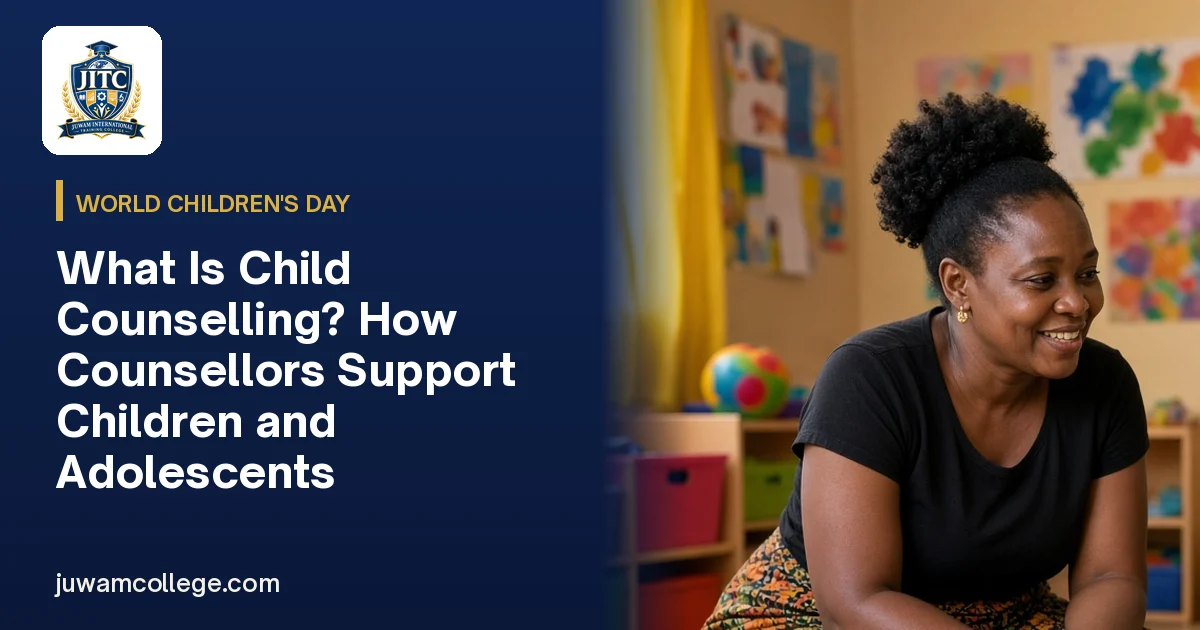
Today is World Children's Day, a day that celebrates children's rights and wellbeing around the world. Yet not every child feels safe, heard or understood.
A child refuses to go to school. A teenager withdraws from friends. A young person knows something is wrong but cannot name what they feel. Child counselling is the space where children begin to make sense of what they cannot yet say.
Key takeaways
- Child counselling supports children and adolescents through anxiety, bullying, family change, grief, friendship conflict and other emotional challenges.
- Child counsellors often use age-appropriate approaches such as play, drawing, storytelling and conversation.
- Child counselling is not about fixing children. It is about helping them understand and express their feelings.
- The Professional Certificate in Child and Adolescents Counselling suits teachers, parents, social workers, youth workers and anyone who works with children.
Ready to Get Started?
Take the next step in your professional development.
What is child counselling?
Child counselling helps young people work through challenges they may not have words for yet. Children and adolescents can face anxiety, bullying, family breakdown, grief, friendship conflict, academic pressure and confusion about who they are. Often they cannot explain what they feel, or why.
A child counsellor creates a safe space where a child can express themselves through play, drawing, storytelling or conversation. The counsellor listens, reflects and helps the child make sense of their experience without judgment.
What do child counsellors help with?
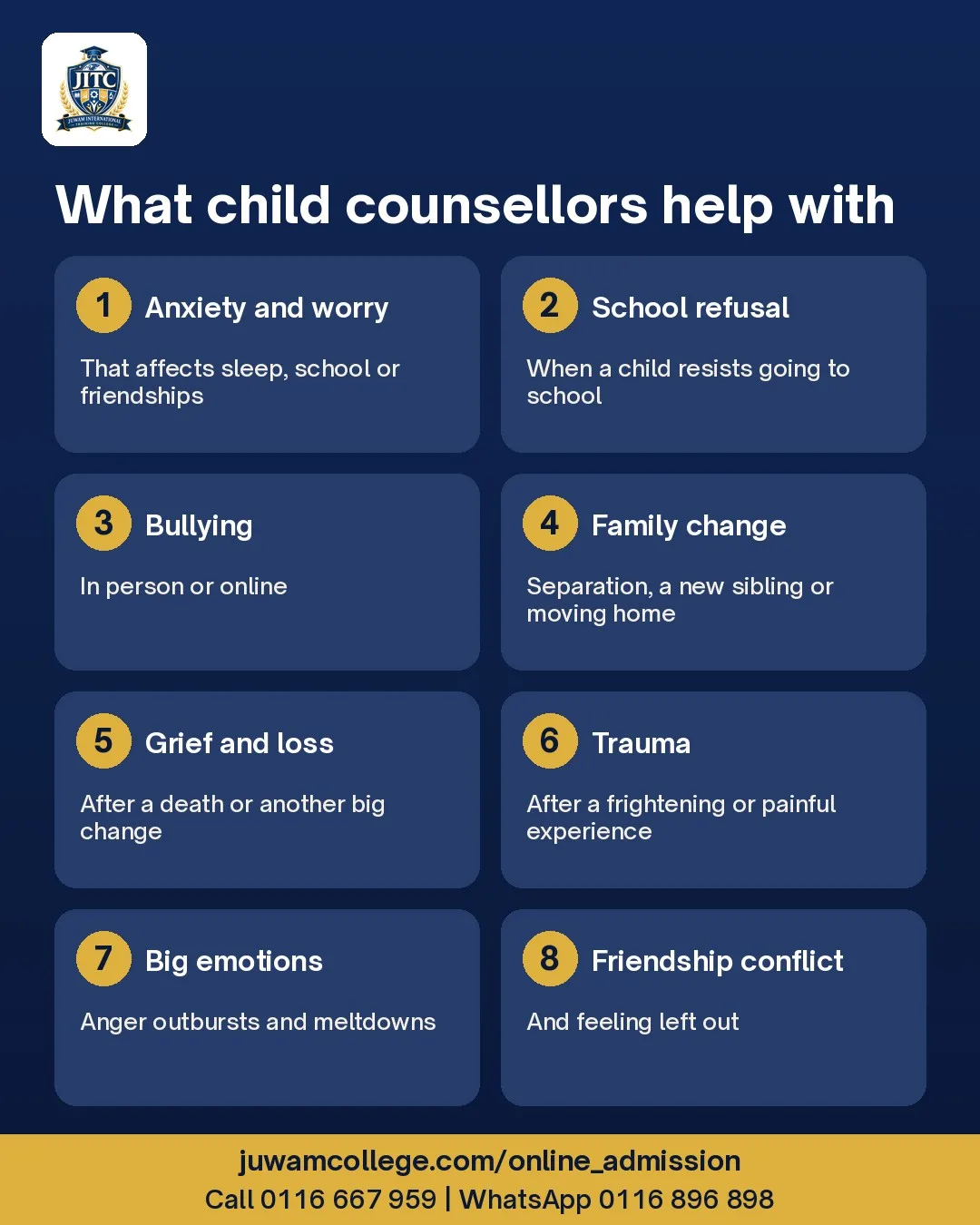
Common reasons a child or teenager may see a counsellor include:
- Anxiety and worry that affects sleep, school or friendships.
- School refusal, when a child resists going to school.
- Bullying, in person or online.
- Family change, such as separation, a new sibling or moving home.
- Grief and loss after a death or another big change.
- Trauma after a frightening or painful experience.
- Big emotions, such as anger outbursts and meltdowns.
- Friendship conflict and feeling left out.
Apply now: Explore the Professional Certificate in Child and Adolescents Counselling at Juwam International Training College. Call 0116 667 959 | WhatsApp 0116 896 898.
How child counselling differs from adult counselling
Children do not process emotions the way adults do. A teenager may say "I'm fine" while quietly pulling away from everyone. A young child may not have the vocabulary to describe anxiety at all.
That is why child counsellors lean on approaches that fit the child's age: play and drawing for younger children, storytelling to explore hard experiences safely, and conversation for older children and adolescents.
Child counselling is not about telling children what to do. It is about helping them understand what they feel.
Who is the Professional Certificate in Child and Adolescents Counselling for?
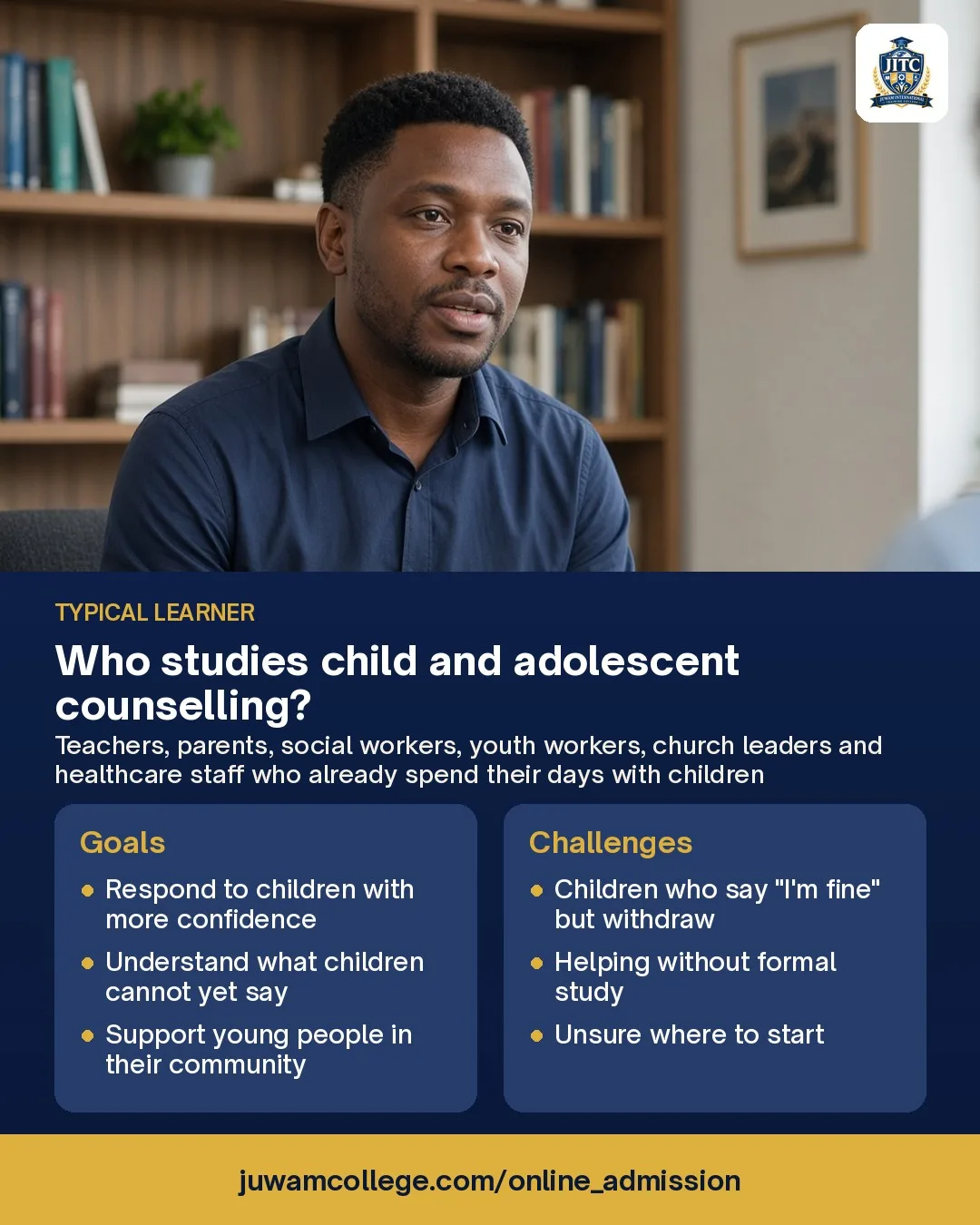
The certificate suits people who already spend their days with children and young people:
- Teachers and school staff who notice students struggling.
- Parents and guardians who want to understand their children better.
- Social workers and youth workers who support young people in the community.
- Church leaders who run children's and youth ministries.
- Healthcare staff who meet children and families every day.
If you are the adult children already come to, formal study can give you more confidence in how you respond.
How to get started
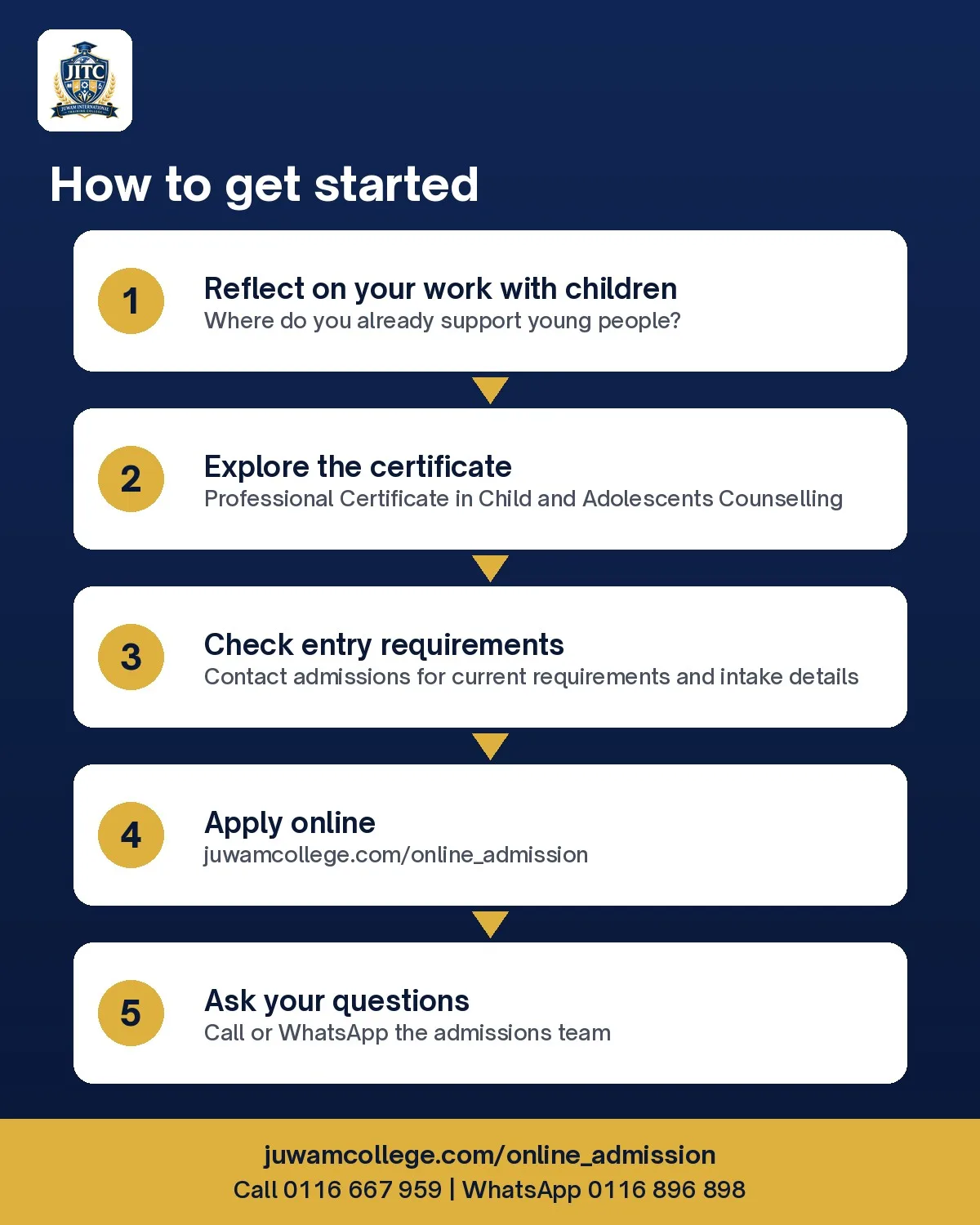
- Reflect on your work with children. Where do you already support young people?
- Explore the certificate. Read about the Professional Certificate in Child and Adolescents Counselling.
- Check entry requirements. Contact admissions for current requirements and intake details.
- Apply online at juwamcollege.com/online_admission.
- Ask your questions. Call or WhatsApp the admissions team.
Every child deserves to be heard
World Children's Day reminds us that every child deserves to be heard and supported. Child counselling makes room for children to understand themselves, not by fixing them, but by listening.
If you work with children, the Professional Certificate in Child and Adolescents Counselling at Juwam International Training College is a path worth exploring.
Apply now: Apply for the Professional Certificate in Child and Adolescents Counselling. Call 0116 667 959 | WhatsApp 0116 896 898.