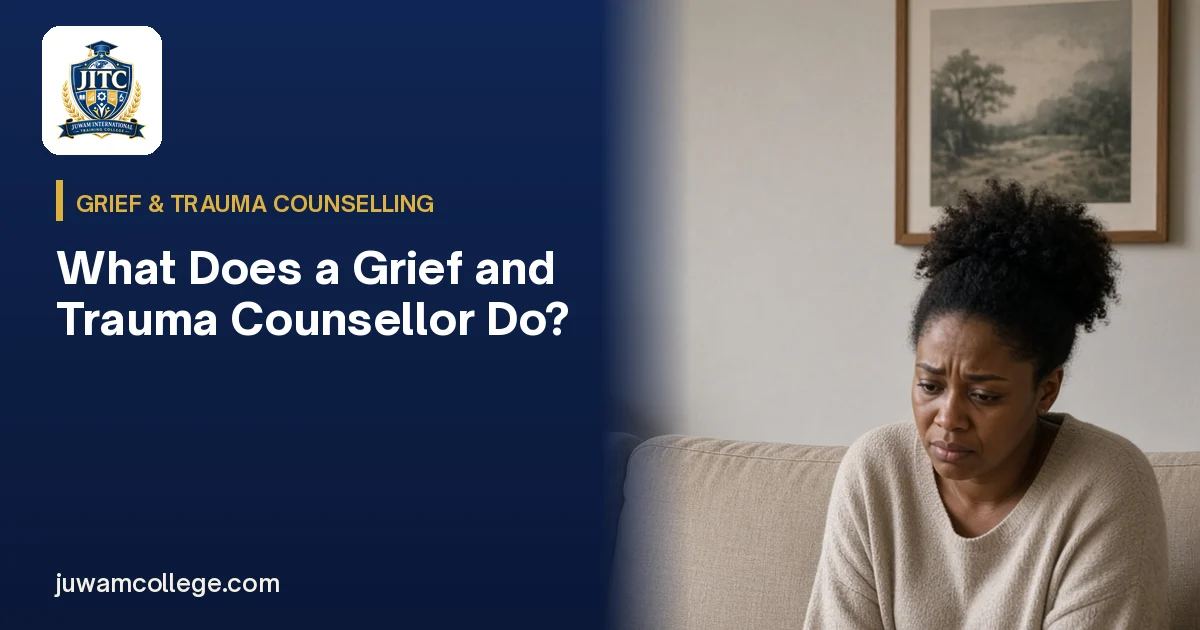
Grief shows up in many forms. A parent who still finds it hard to say a lost child's name. A driver who survived a road accident and now avoids the wheel. These are the people who walk into a grief and trauma counsellor's room, carrying pain that has nowhere else to go.
Grief and trauma counselling is not about fixing people or telling them to move on. It is about sitting with someone in their hardest moment, helping them make sense of what happened, and finding a way forward that honours their loss.
Key takeaways
- Grief and trauma counsellors support people through bereavement, accidents and other events that shake their sense of safety.
- Their first job is to create a safe, non-judgemental space where clients can talk at their own pace.
- Signs someone may need support include withdrawal, nightmares, numbness, anger outbursts and avoiding reminders.
- A good counsellor knows the limits of the role and when to refer a client for other care.
Ready to Get Started?
Take the next step in your professional development.
What does a grief and trauma counsellor do?
A grief and trauma counsellor meets people who have lived through loss, sudden death, accidents, serious illness or other events that shattered their sense of safety. The counsellor listens and helps them process what happened without rushing them toward closure.
Creating a safe space. Trauma can make people feel unsafe in their own bodies and minds. The counsellor's first task is to offer a calm, confidential space where the client can speak without fear of judgement, disbelief or being told to "just get over it".
Meeting clients where they are. Grief is not a straight line. People can move between shock, anger, sadness and acceptance in unpredictable loops. A counsellor notices where the client is today and meets them there.
Knowing when to refer. Some clients need medical or specialist care beyond a counsellor's role. A skilled counsellor recognises this and arranges a referral without the client feeling abandoned.
Apply now: Explore the Professional Certificate in Grief and Trauma Counselling at Juwam International Training College. Call 0116 667 959 | WhatsApp 0116 896 898.
Signs someone may need grief and trauma support
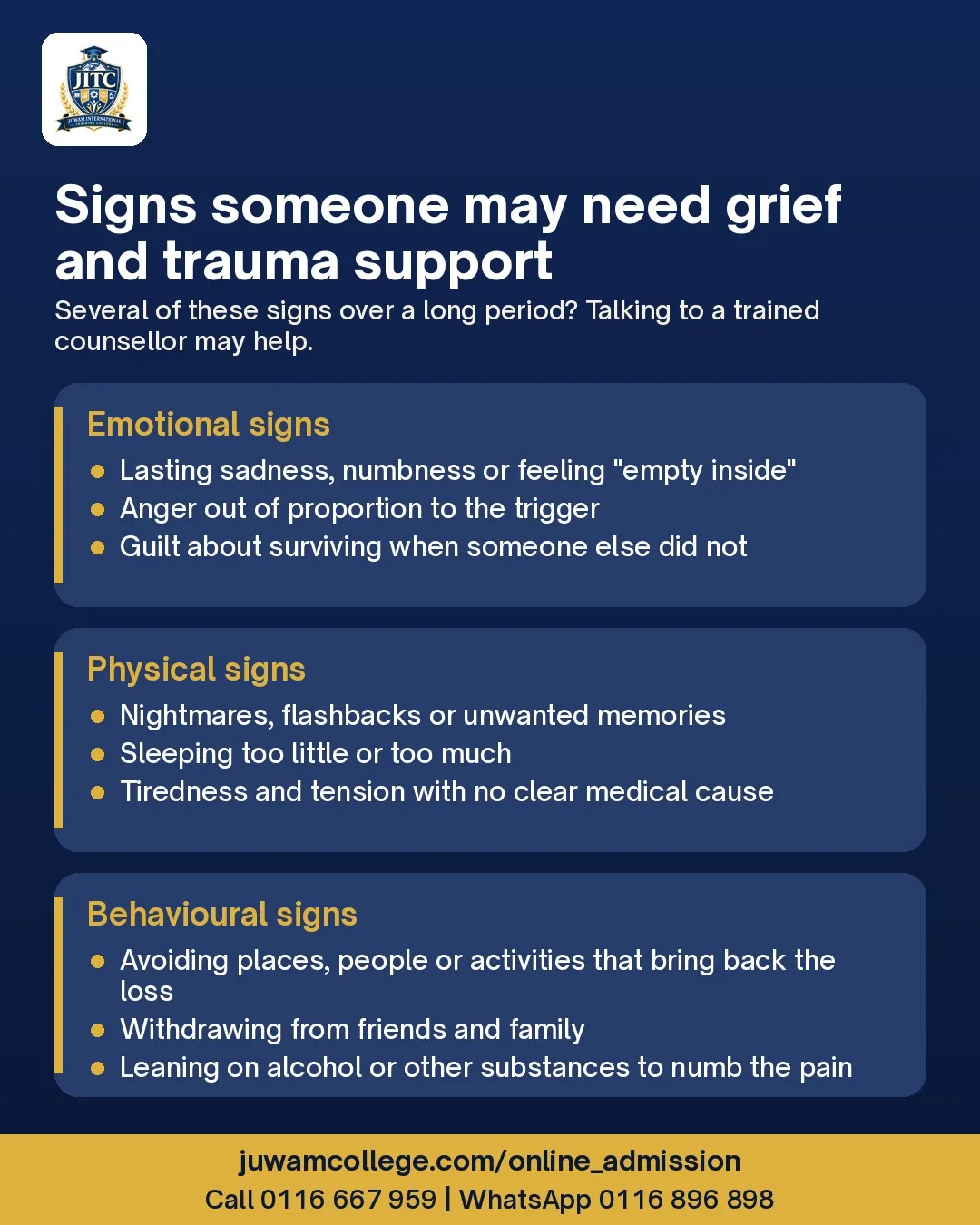
Emotional signs - Lasting sadness, numbness or feeling "empty inside" - Anger that seems out of proportion to the trigger - Guilt about surviving when someone else did not
Physical signs - Nightmares, flashbacks or unwanted memories - Sleeping too little or too much - Tiredness and body tension with no clear medical cause
Behavioural signs - Avoiding places, people or activities that bring back the loss - Withdrawing from friends and family - Leaning on alcohol or other substances to numb the pain
If someone shows several of these signs over a long period, talking to a trained counsellor may help.
How grief and trauma counselling works
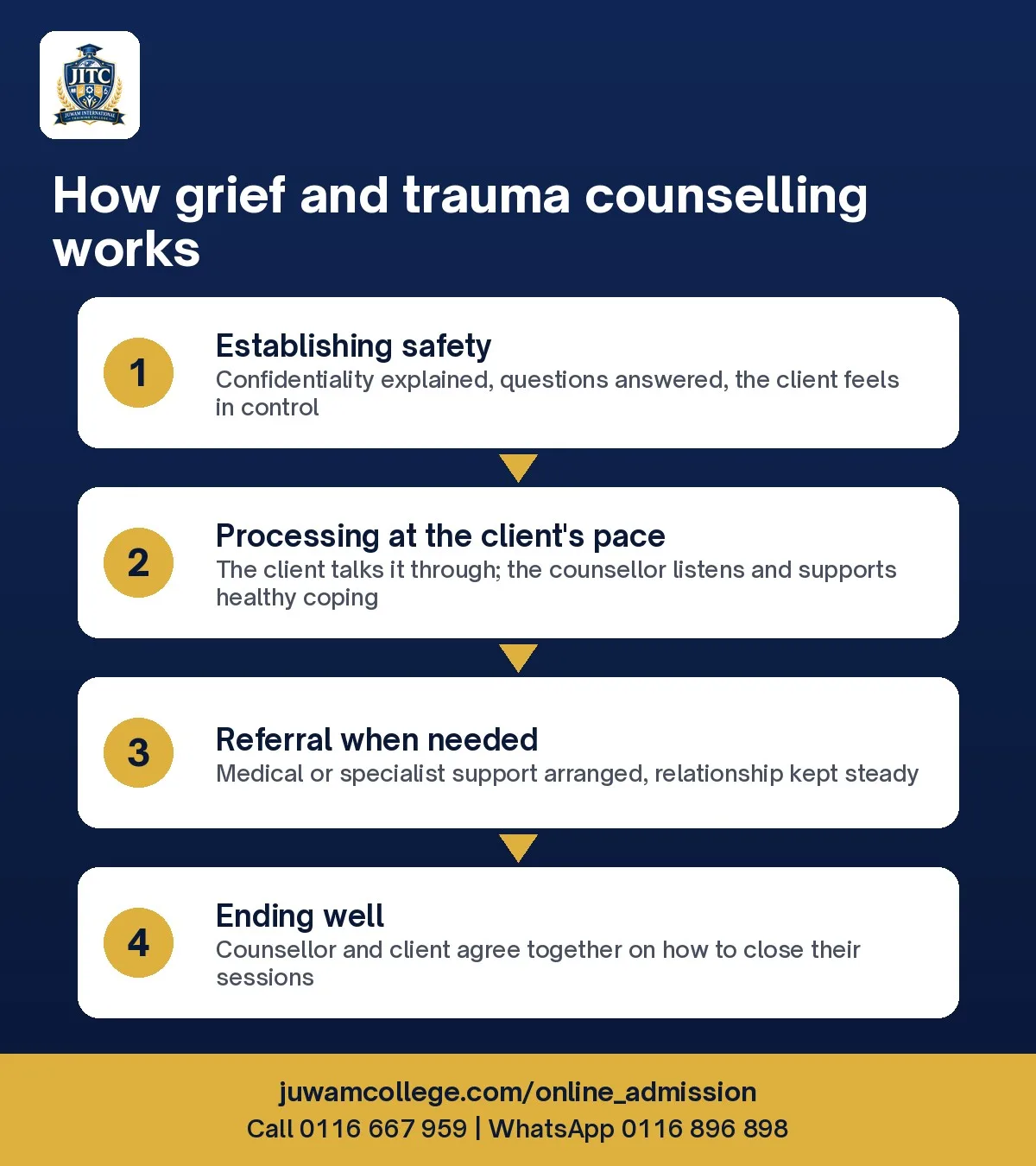
- Establishing safety. In the first conversation, the counsellor explains confidentiality, answers questions and helps the client feel in control.
- Processing at the client's pace. Over the following sessions, the client talks through their experience while the counsellor listens and supports healthy ways of coping.
- Referral when needed. If the client needs medical or specialist support, the counsellor coordinates a referral while keeping the relationship steady.
- Ending well. When the client feels ready, counsellor and client agree together on how to close their sessions.
Who trains as a grief and trauma counsellor?
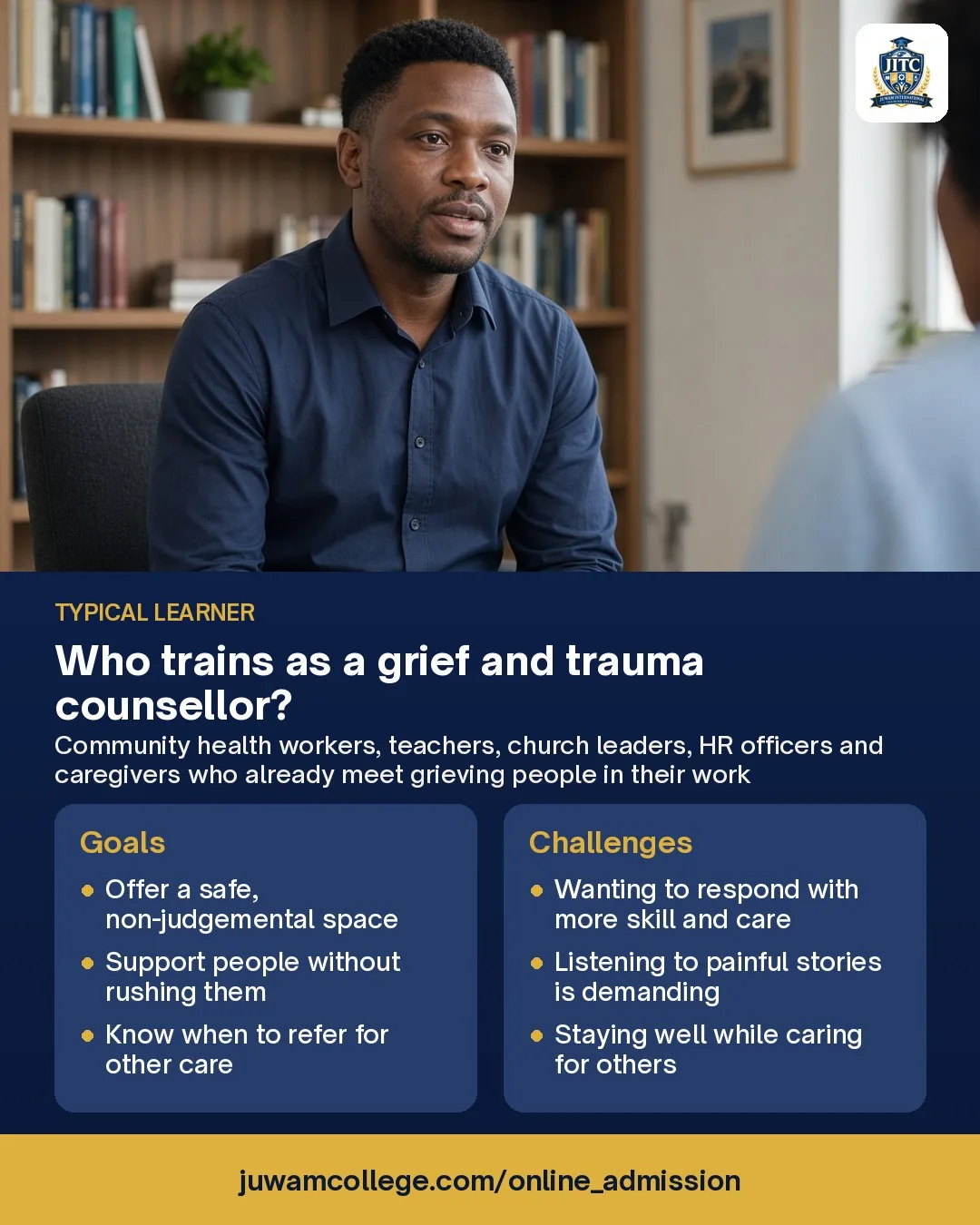
Many learners already meet grieving people in their daily work and want to respond with more skill and care: community health workers, teachers, church leaders, HR officers and caregivers. Others have walked through loss themselves.
How to start training
Step 1: Build a foundation. Some people begin with broad counselling study, such as the Diploma in Counselling Psychology, before choosing a specialism.
Step 2: Focus on grief and trauma. The Professional Certificate in Grief and Trauma Counselling at Juwam International Training College is a path for anyone who wants to support people through loss.
Step 3: Look after yourself. Listening to painful stories is demanding. Supervision, peer support and self-care help counsellors stay well.
Ready to take the first step?
If you want to support people through their hardest moments, start your application today.
Apply now: Apply for the Professional Certificate in Grief and Trauma Counselling at Juwam International Training College. Call 0116 667 959 | WhatsApp 0116 896 898.