Stress, family breakdown, addiction and exam pressure are now everyday conversations in Kenya. Schools, hospitals, churches, NGOs and employers all need people who can listen well and help others cope. If you have been wondering how to turn your care for people into a career, this guide walks you through each step.
Key takeaways
- Counselling is a profession that combines training, supervised practice and ethics.
- Most people start with a certificate, then progress to a diploma and degree.
- Professional practice in Kenya is regulated under the Counsellors and Psychologists Act, 2014.
- Core skills such as active listening and empathy can be learned and practised.
What does a counsellor actually do?
A counsellor helps clients talk through personal, emotional or relationship problems in a safe, confidential space, and supports them to find their own way forward. Counsellors do not give orders or diagnose illness; they listen, ask good questions and use proven techniques to help people change.
Ready to Get Started?
Take the next step in your professional development.
Step-by-step: becoming a counsellor in Kenya
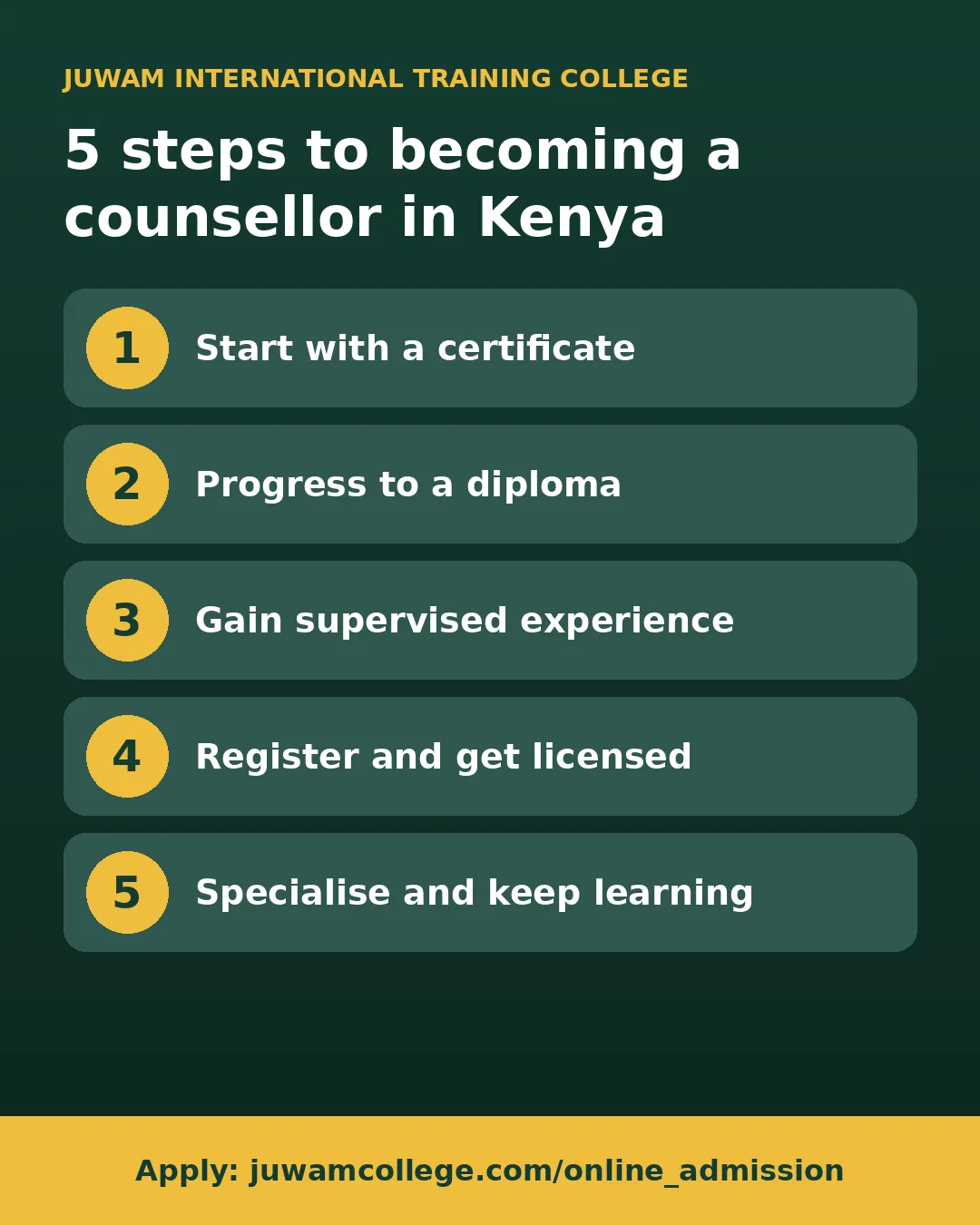
Step 1: Start with a recognised certificate
A certificate in counselling introduces counselling theories, basic skills and ethics. It is ideal if you are new to the field or want to use counselling skills in your current job as a teacher, pastor, HR officer or community worker.
Step 2: Progress to a diploma
A diploma deepens your theory and adds supervised practicum hours, where you counsel real clients under a qualified supervisor.
Step 3: Gain supervised experience
Volunteer or intern with schools, rehabilitation centres, hospitals or NGOs. Supervised hours build the confidence and record you need for licensing.
Step 4: Register and get licensed
The Counsellors and Psychologists Act, 2014 provides for licensing of practitioners in Kenya. Check the latest registration requirements before you start practising privately.
Step 5: Keep learning
Specialise in areas such as addiction, trauma, marriage and family, or child and adolescent counselling.
Callout: Did you know? Many people begin counselling training to help their own families and communities, then discover it is a full career.
Skills every good counsellor needs: checklist
Tick the ones you already have:
- ☐ I listen more than I talk
- ☐ People trust me with private matters
- ☐ I can stay calm when someone is upset
- ☐ I respect views different from my own
- ☐ I keep confidences
If you ticked three or more, counselling could be a strong fit. Training will sharpen the rest.
Ready to start? Apply now to explore counselling training programmes at Juwam. Call 0116 667 959 or WhatsApp 0116 896 898 for admission guidance.
Where can counsellors work?
- Schools, colleges and universities
- Hospitals and HIV/AIDS care programmes
- Rehabilitation and addiction centres
- Churches and faith-based organisations
- NGOs, prisons and community programmes
- Corporate HR and employee wellness
- Private practice
Poll: Which area of counselling interests you most? Youth / Marriage and family / Addiction / Workplace wellness
Take the first step
Your ability to listen can change lives.
Apply now: Explore the Diploma in Counselling Psychology or other counselling programmes at Juwam. Call 0116 667 959 or WhatsApp 0116 896 898 for course enquiries.